

Why B2C SEO Strategy Is Your Path to Consumer Attention
B2C SEO strategy is how online businesses attract individual consumers through search engines, drive organic sales, and build lasting brand loyalty—without relying on expensive paid ads. Here’s what a successful B2C SEO strategy includes:
- Keyword research targeting high-intent consumer searches (like “best running shoes” or “affordable home decor”)
- Mobile-first optimization since over 60% of consumer searches happen on phones
- Fast, conversion-focused pages with compelling product descriptions and clear calls-to-action
- Local SEO tactics to capture “near me” searches and drive foot traffic
- Content that connects emotionally through storytelling, reviews, and lifestyle relevance
- Technical excellence including page speed, structured data, and seamless user experience
Why this matters: Organic search is often the highest-converting channel for B2C companies. Unlike paid ads that stop working when you stop paying, SEO-driven content marketing is 41% cheaper than paid search advertising and delivers compounding returns over time. Every optimized page becomes a scalable asset that attracts customers month after month.
The challenge? B2C consumers make quick decisions driven by emotion and immediate needs. Your SEO strategy must capture attention fast, build trust instantly, and guide shoppers smoothly from search to purchase.
I’m Frank Yao, founder of Zealous SEO, and I’ve spent over a decade building B2C SEO strategy frameworks that help consumer brands dominate competitive search markets through conversion-focused optimization and technical excellence. My approach combines entity-based SEO, schema-driven visibility, and AI-assisted workflows to create search systems that drive measurable growth.
The Foundation: Understanding the B2C Customer and Crafting Your Content Plan
Before we dive into the nitty-gritty of technical SEO, we need to understand the heart of any successful B2C SEO strategy: the consumer. The way businesses interact with individual customers (B2C) is fundamentally different from how they interact with other businesses (B2B). This distinction shapes every aspect of our SEO efforts, from keyword choices to content tone.
B2C vs B2B SEO: A Tale of Two Audiences
The core difference lies in buyer behavior and sales cycle length. B2C customers are often driven by emotional triggers, immediate needs, and personal preferences, leading to quicker, more impulsive purchase decisions. Think about buying a new pair of shoes or ordering dinner – it is often a fast process. In contrast, B2B purchasing decisions are typically more logical, analytical, and involve multiple stakeholders, resulting in a much longer sales cycle. For instance, 74.6% of B2B sales to new customers take at least four months to close.
This means our B2C SEO strategy must cater to a consumer who wants instant gratification, clear benefits, and an experience that feels personal and engaging. We aim for mass appeal, using broader keywords and visually rich content to capture attention and drive direct sales and brand awareness.
Here is a quick comparison to highlight these differences:
| Feature | B2C SEO | B2B SEO |
|---|---|---|
| Audience | Individual consumers, broad demographics | Businesses, niche industries, specific job roles |
| Keywords | Broad, high-volume, often emotional or problem-based (e.g., “best running shoes for flat feet”) | Niche, lower-volume, often technical or ROI-focused (e.g., “enterprise resource planning software”) |
| Content | Emotional, visual, lifestyle-focused content, reviews, and how-to guides | Informational, data-driven content, case studies, white papers, and webinars |
| Sales Cycle | Short (minutes to days) | Long (months to years) |
Effective Keyword Research for a B2C Audience
For B2C brands, keyword research starts with understanding consumer intent. People search differently when they are browsing, comparing, or ready to buy.
We typically group keywords into a few key intent buckets:
- Informational queries: Research-focused searches like “how to clean white sneakers” or “what is retinol”.
- Comparative queries: Mid-funnel searches like “best running shoes for flat feet” or “AirPods vs Galaxy Buds”.
- Purchase-intent keywords: Bottom-of-funnel queries like “buy running shoes online”, “same-day flower delivery Surrey”, or “discount office chairs”.
- Long-tail keywords: Longer, more specific phrases (e.g., “best waterproof hiking boots for women in Vancouver”) that usually indicate clearer intent and are easier to rank for.
To uncover these opportunities, we:
- Analyze your existing search data in Google Search Console.
- Use Google Keyword Planner to find related terms, search volumes, and cost-per-click signals (which often reflect commercial value).
- Review competitor websites and SERPs to see what terms successful brands in your niche are targeting.
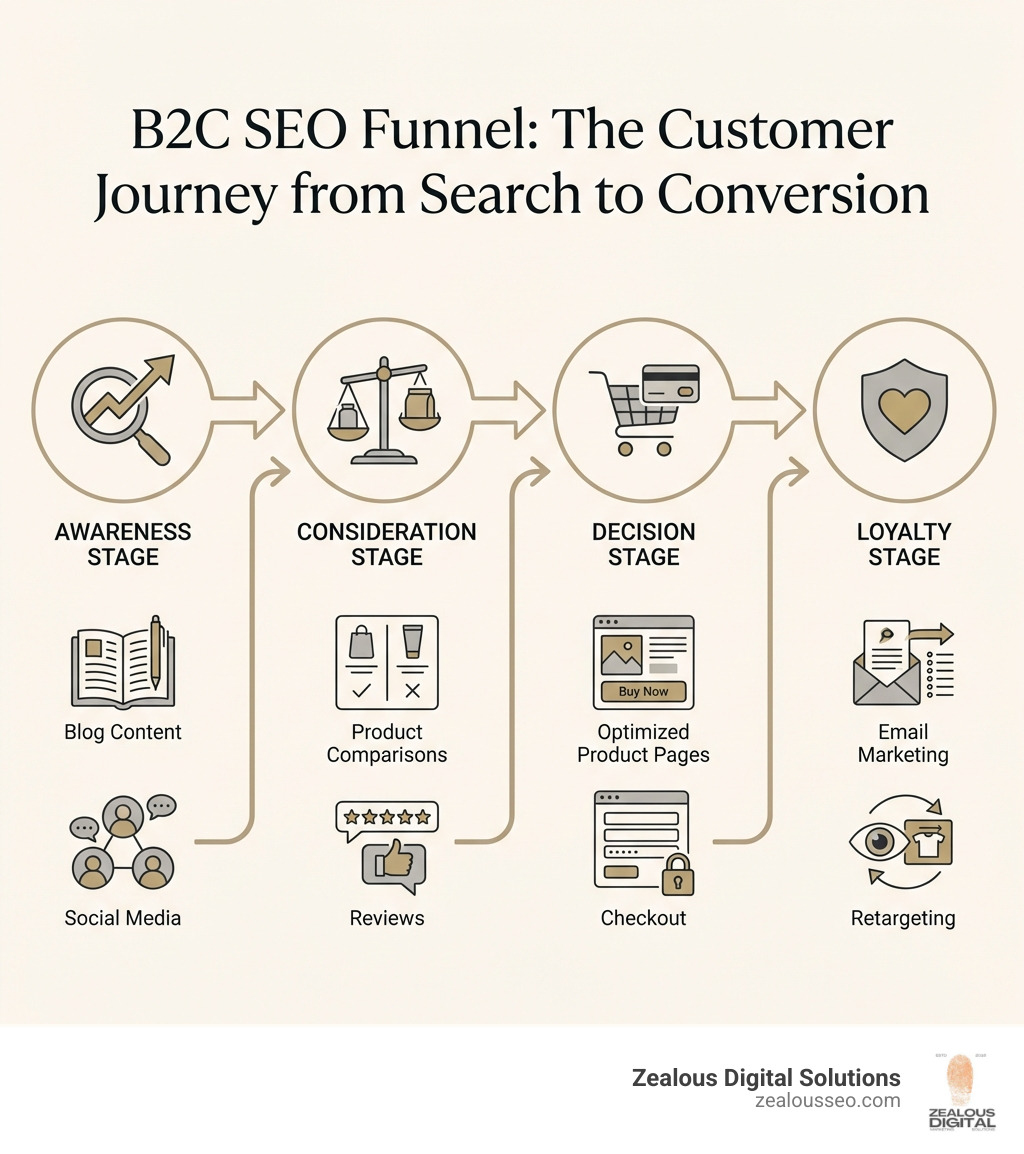
- Map keywords to the customer journey (awareness, consideration, decision) so each piece of content has a clear job.
The Role of Content in Your B2C SEO Strategy
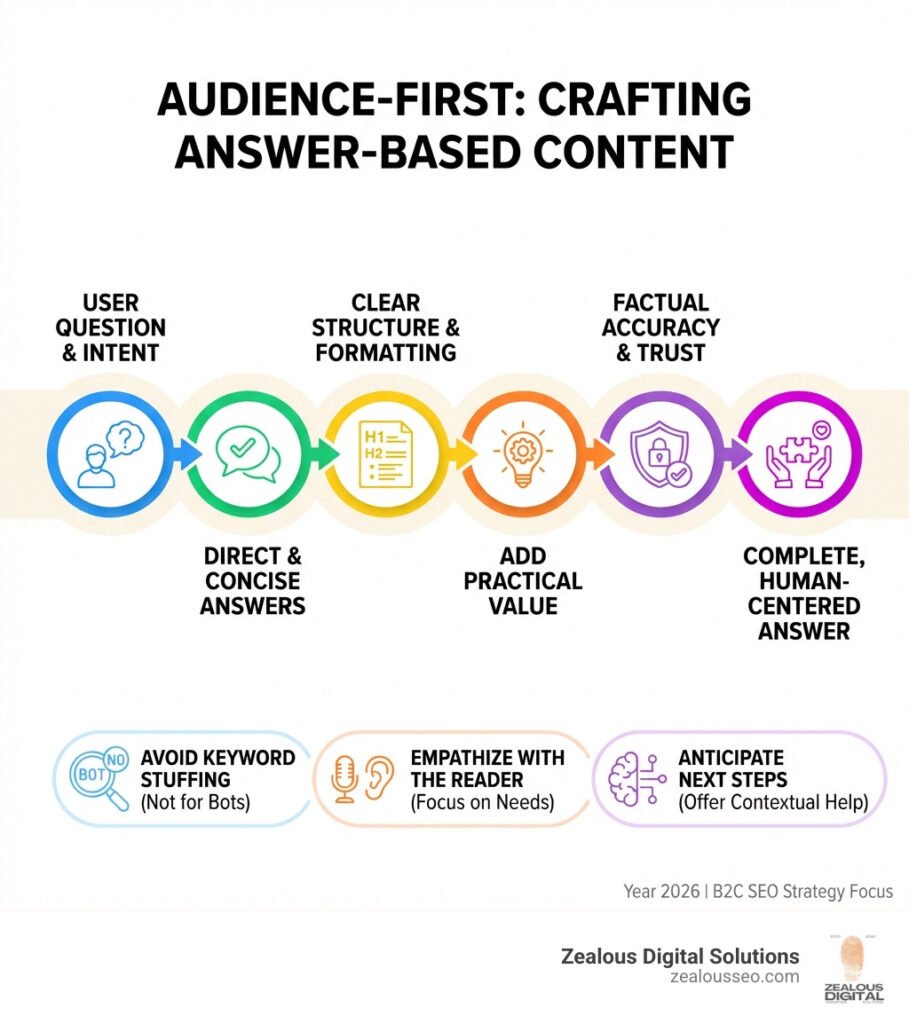
Content is where your B2C SEO strategy comes to life. It is how you attract, educate, and persuade consumers at every stage of their journey.
We start with:
- Buyer personas: Detailed profiles of your ideal customers, including their goals, pain points, and objections.
- Content tilt: The unique angle or perspective that differentiates your brand (e.g., sustainability, local expertise in BC, premium craftsmanship).
Effective B2C content often includes:
- Story-driven blog posts that connect your products to real-life scenarios.
- How-to guides and tutorials that solve everyday problems and build trust.
- Product comparisons and buyers’ guides that make decisions easier and faster.
- Visual content such as short-form videos, carousels, and lifestyle photography that showcase your products in context.
-
Email- and social-ready snippets repurposed from SEO content to create a consistent cross-channel experience.
-
User-Generated Content (UGC): This is gold. Testimonials, customer reviews, and social media posts from your happy customers build immense trust. Studies show that nearly half of consumers trust user reviews as much as personal recommendations, and products with reviews are 270% more likely to be purchased. We help our clients encourage and leverage this powerful content.
Our goal is to create content that is helpful, original, and user-focused, ensuring it provides unique value that would be missed if it disappeared from the marketplace. More info about our content strategies on our Blog.
Executing Your B2C SEO Strategy: On-Page, Off-Page, and Technical Optimization
With a solid understanding of our B2C customer and a content plan in place, it’s time to execute the core components of our B2C SEO strategy. This involves optimizing every element of your online presence, ensuring a seamless user experience (UX) and building authority across the web. Nearly 9 out of 10 consumers will not return to an online store after just one negative user experience, making UX a non-negotiable priority.
On-Page and Technical SEO for a Seamless User Experience
On-page and technical SEO are the backbone of any effective B2C SEO strategy, ensuring your website is not only findable but also enjoyable to use. In the B2C world, every millisecond counts.
- Page Speed: Consumers are impatient. Our research shows that page load times should ideally be no more than three seconds. We optimize this by minifying code, compressing images (aiming for under 500 KB per page), caching web pages, and limiting redirects.
- Mobile-Friendliness: This is no longer optional; it’s mandatory. Google has announced that it practises “mobile-first indexing”, meaning Google primarily uses the mobile version of your content for indexing and ranking. With 60% of e-commerce sales now taking place on a mobile device, a responsive, intuitive mobile design is crucial for our clients in Vancouver, Surrey, and beyond.
- Structured Data (Schema Markup): This is how we help search engines understand your content better. By integrating schema markup (like JSON-LD) into your page code, we can highlight essential information such as product details, prices, reviews, and FAQs. This often leads to rich results (like star ratings in search results), making your listings more appealing and increasing click-through rates.
- Core Web Vitals: These are Google’s metrics for real-world user experience, measuring loading performance, interactivity, and visual stability. Optimizing these factors is key to higher rankings and happier customers.
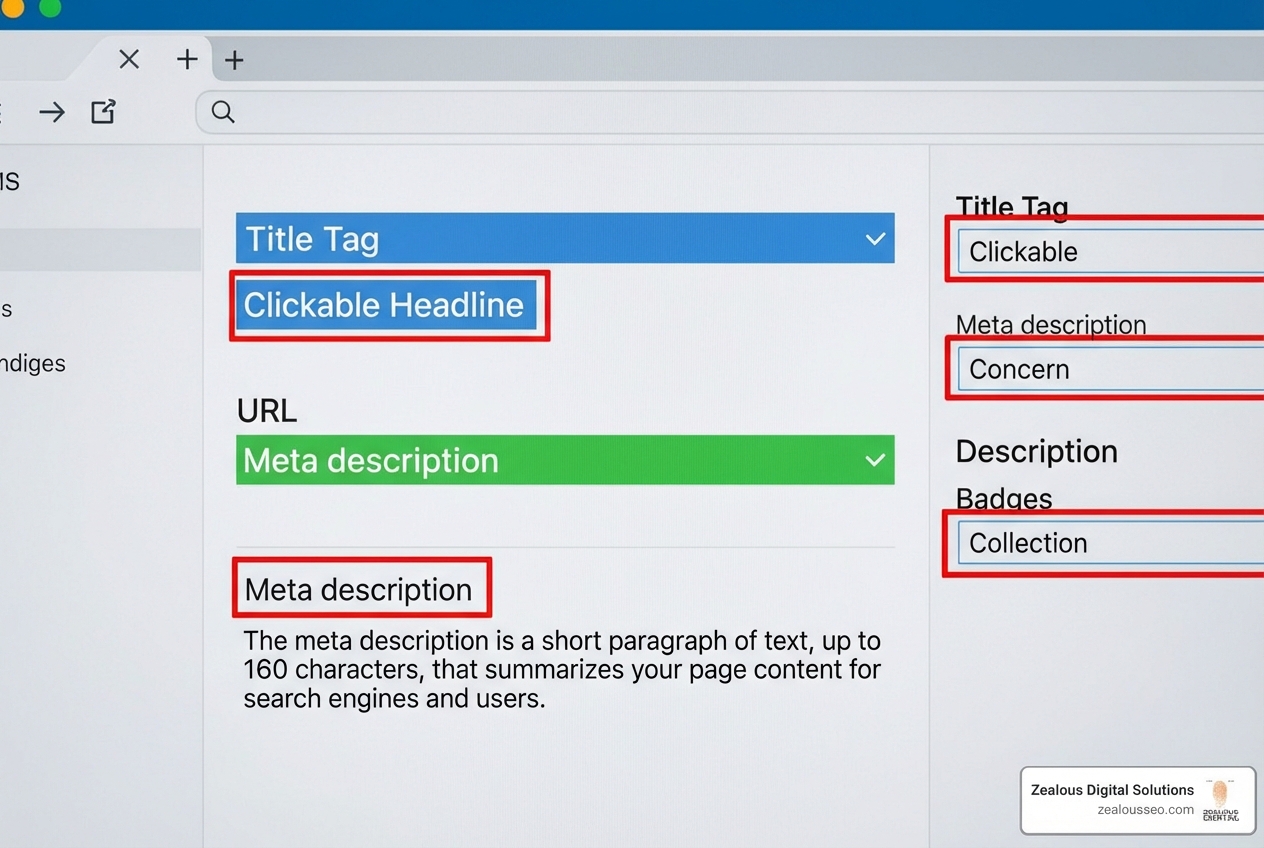
- Compelling On-Page Elements: We ensure your title tags, meta descriptions, headings, and URLs are optimized with relevant keywords and compelling language to attract clicks. Image alt text and descriptive anchor text for internal links also play a vital role.
At Zealous Digital Solutions, we take a holistic approach to Google SEO, ensuring every technical detail contributes to a superior user experience and higher rankings.
Off-Page SEO: Building Authority and Trust
Off-page SEO is all about building your brand’s credibility and visibility beyond your website. For a B2C SEO strategy, this often translates into social proof and widespread recognition, which are powerful drivers for consumer trust and purchasing decisions.
- Backlinks: These are links from other reputable websites to yours. Google views backlinks as votes of confidence. The more high-quality, relevant backlinks you earn, the more authoritative your site appears. We focus on creating exceptional content that naturally attracts links and identifying opportunities for outreach to relevant lifestyle blogs, review sites, and online publications that resonate with consumers in BC. We’ve seen the impact of strong off-page strategies, with businesses often seeing significant increases in organic transactions and revenue through strategic SEO.
- Social Media Signals: While social media links don’t directly impact SEO rankings, an active and engaged social presence drives traffic, increases brand awareness, and can lead to more mentions and shares of your content, indirectly boosting your SEO. We help our clients leverage platforms like Facebook, Instagram, and TikTok for tutorials, giveaways, and to showcase user-generated content.
- Influencer Marketing: Collaborating with relevant influencers in your niche can expose your brand to a wider audience, generate valuable backlinks, and create authentic user-generated content.
- User-Generated Content (UGC) & Online Reviews: As mentioned earlier, UGC, especially customer reviews and testimonials, is incredibly powerful. We help businesses implement strategies to encourage reviews, such as sending email requests 7 to 21 days after the customer receives their order. These reviews improve trust and often appear in rich snippets, making your product listings stand out.
Specialized Tactics: Mastering Local SEO and E-commerce
For many B2C businesses, particularly those with physical locations or an online store, specialized SEO tactics are essential. This is where we focus on driving foot traffic to your physical storefronts or converting online browsers into buyers.
Leveraging Local SEO for Brick-and-Mortar Businesses
If your business has a physical presence in Vancouver, Surrey, Coquitlam, Burnaby, North Vancouver, West Vancouver, Delta, New Westminster, Richmond, Pitt Meadows, Maple Ridge, or Langley, local SEO is a non-negotiable part of your B2C SEO strategy. Consumers often search for products and services “near me” with a high intent to purchase.
Consider this: Google’s local search statistics show that 76% of people who perform a local business search actually visit a local business on the same day, and 28% make a purchase on the same day. That’s a huge opportunity!
Our local SEO approach includes:
- Google Business Profile Optimization: We optimize your free Google Business Profile with accurate and comprehensive information (name, address, phone number, hours, photos, services). This profile is key to appearing in local search results and the coveted “local 3-pack.” We also help you post updates for special offers or sales.
- “Near Me” Search Optimization: We ensure your website and content are optimized for location-specific keywords and “near me” queries, making it easy for local customers to find you.
- Local Citations: Consistent business listings across online directories (Yelp, Yellow Pages, etc.) build local authority.
- Customer Reviews: Encouraging and managing local customer reviews on your Google Business Profile and other platforms is vital for local ranking and trust.
- Localized Content: Creating content specific to events, landmarks, or neighborhoods in your service areas (e.g., “Best coffee shops near Stanley Park, Vancouver”).
For a deeper dive into how we tailor digital marketing solutions for businesses in our region, check out The Ultimate Guide to Digital Marketing Services in BC.
Optimizing for E-commerce Sales
For B2C businesses selling products online, e-commerce optimization is paramount. Our B2C SEO strategy for e-commerce focuses on making every product and category page a conversion powerhouse.
- Product Page SEO: Each product page is a potential entry point for a customer. We optimize product titles, descriptions, and images with relevant keywords, ensuring they are unique, benefit-driven, and persuasive (not just manufacturer copy). We also implement product schema to display price, availability, and ratings directly in search results.
- Category Page Optimization: Category pages (e.g., “Women’s Running Shoes”) are crucial for high-volume, broader searches. We optimize these pages with descriptive content, relevant keywords, and clear navigation to help users find what they’re looking for.
- Conversion-Focused Copy: Every word on your e-commerce site should guide the customer towards a purchase. We craft compelling calls-to-action (CTAs) and ensure product descriptions highlight benefits and solve customer problems.
- High-Quality Images and Rich Media: Visuals are critical for B2C. We ensure product images are high-resolution, zoomable, and optimized for fast loading. Incorporating videos, 360-degree views, and size guides can significantly improve the user experience and conversion rates.
- Streamlined Checkout Process: A complex or slow checkout is a conversion killer. We advocate for a simple, fast, and secure checkout flow.
- Internal Linking for Related Products: We strategically link to related products or “customers also bought” sections to increase average order value and keep users engaged on your site.
Measuring Success and Future-Proofing Your Strategy
A successful B2C SEO strategy isn’t a “set it and forget it” endeavor. It requires continuous monitoring, analysis, and adaptation. We make data-driven decisions to ensure we’re maximizing your ROI and staying ahead of the curve. Effective SEO has been shown to increase conversion by 2.4% on average across all industries, so tracking is key.
Common mistakes we help our clients avoid include:
- Low-Quality Content: Content that doesn’t provide value or is poorly written will not rank well and will deter users.
- Keyword Stuffing: Overloading content with keywords harms user experience and can lead to search engine penalties.
- Poor Mobile Design: Ignoring mobile optimization in today’s mobile-first world is a recipe for disaster.
- Ignoring Analytics: Without tracking key metrics, you can’t understand what’s working and what’s not.
Key KPIs and Tools for Measuring B2C SEO Success
To truly understand the impact of our B2C SEO strategy, we track a range of Key Performance Indicators (KPIs):
- Organic Traffic: The number of visitors coming to your site from search engines.
- Conversion Rate: The percentage of organic visitors who complete a desired action (e.g., make a purchase, fill out a form).
- Customer Acquisition Cost (CAC): The cost of acquiring a new customer through organic channels.
- Keyword Rankings: Your website’s position in search results for target keywords.
- Bounce Rate: The percentage of visitors who leave your site after viewing only one page. A high bounce rate often indicates a poor user experience or irrelevant content.
- Average Session Duration: How long users spend on your site.
We leverage powerful SEO tools to gather and analyze this data:
- Google Analytics: For comprehensive website traffic and user behavior insights.
- Google Search Console: To monitor your site’s performance in Google search results, identify crawl errors, and track keyword performance.
- Ahrefs & SEMrush: Industry-leading platforms for in-depth keyword research, competitor analysis, backlink auditing, and technical SEO checks.
The Future: How AI and Google Gemini Impact B2C SEO
The digital landscape is constantly evolving, and artificial intelligence (AI) is at the forefront of this change. Google, in particular, is leaning heavily into AI for personalized and relevant results. This means our B2C SEO strategy must adapt to a future where AI-powered search, like Google Gemini, plays an increasingly significant role.
Google Gemini, a cutting-edge AI model, is ready to revolutionize how people access information online. It will likely bring:
- Deeper Personalization: Search results will be even more custom to individual user intent, history, and preferences.
- Predictive Search: AI will anticipate user queries, offering answers and solutions even before a full search is typed.
- Conversational Search: The rise of voice search and AI chatbots means users will interact with search engines in more natural, conversational ways. Learn about Google’s AI-powered Search Generative Experience, which is already changing how people find information.
To thrive in this AI-driven future, our B2C SEO strategy focuses on:
- Exceptional User Experience: AI algorithms prioritize fast, mobile-friendly, and easy-to-steer websites.
- High-Quality, Authoritative Content: Content that demonstrates expertise, authority, and trustworthiness (E-E-A-T) will be even more crucial. AI favors content that is accurate, current, and truly helpful.
- Structured Data: Properly implemented schema markup will help AI understand your content’s context and display it effectively in new search experiences.
- Emotional Connection through Storytelling: In an AI-dominated world, embracing your human side through authentic storytelling and shared values becomes a unique advantage. AI can process facts, but genuine connection still comes from human-centric content.
We’re constantly researching and integrating the latest AI advancements into our strategies, ensuring our clients are prepared for the future of search. Find more about The Great Search Revolution: How AI is Reshaping Digital Marketing.
Frequently Asked Questions about B2C SEO Strategy
What is the main difference between B2C and B2B SEO?
The main difference lies in the target audience, their buying behavior, and the sales cycle. B2C SEO targets individual consumers, focusing on emotional triggers, immediate needs, and shorter sales cycles (minutes to days). Content is often visually driven, persuasive, and aims for mass appeal. B2B SEO, conversely, targets businesses, appealing to logic, ROI, and longer, more complex sales cycles (months). Its content is typically educational, data-driven, and focuses on building authority and trust for multiple decision-makers.
How long does it take for a B2C SEO strategy to show results?
SEO is a long-term investment, and patience is key. While some initial improvements in rankings or traffic might be seen within a few weeks or months, significant and sustainable results from a comprehensive B2C SEO strategy typically take 6 to 12 months or even longer. Factors like industry competition, website authority, and the consistency of optimization efforts all play a role. However, unlike paid advertising, SEO results compound over time, offering a far better return on investment in the long run.
What is the most important part of B2C SEO?
While all elements of a B2C SEO strategy are interconnected, the most important part is arguably understanding and catering to consumer search intent and user experience. If you don’t understand why a consumer is searching and what they expect when they land on your page, even perfect technical SEO won’t convert them. A seamless, fast, mobile-friendly experience combined with engaging, relevant, and emotionally resonant content is paramount to capturing attention and driving sales in the B2C market.
Conclusion: Turn Your Strategy into Sustainable Growth
Developing and executing an effective B2C SEO strategy is no small feat. It demands a deep understanding of consumer psychology, technical expertise, and a commitment to continuous adaptation in a rapidly changing digital landscape. But the rewards are immense: increased online visibility, a steady stream of organic traffic, higher conversion rates, and ultimately, a loyal customer base that drives sustainable business growth.
At Zealous Digital Solutions, we pride ourselves on our personalized, data-driven approach. We partner with B2C businesses across Vancouver, Surrey, Coquitlam, Burnaby, North Vancouver, West Vancouver, Delta, New Westminster, Richmond, Pitt Meadows, Maple Ridge, and Langley to deliver exceptional results and ongoing support. We don’t just implement tactics; we craft a comprehensive blueprint custom to your unique brand and audience, ensuring your online presence not only attracts but truly engages and converts consumers.
Ready to transform your online presence and open up your full potential? Contact Us to build your strategy today. Let us help you master your online presence with our Search Engine Optimization services and turn browsers into loyal customers.


